
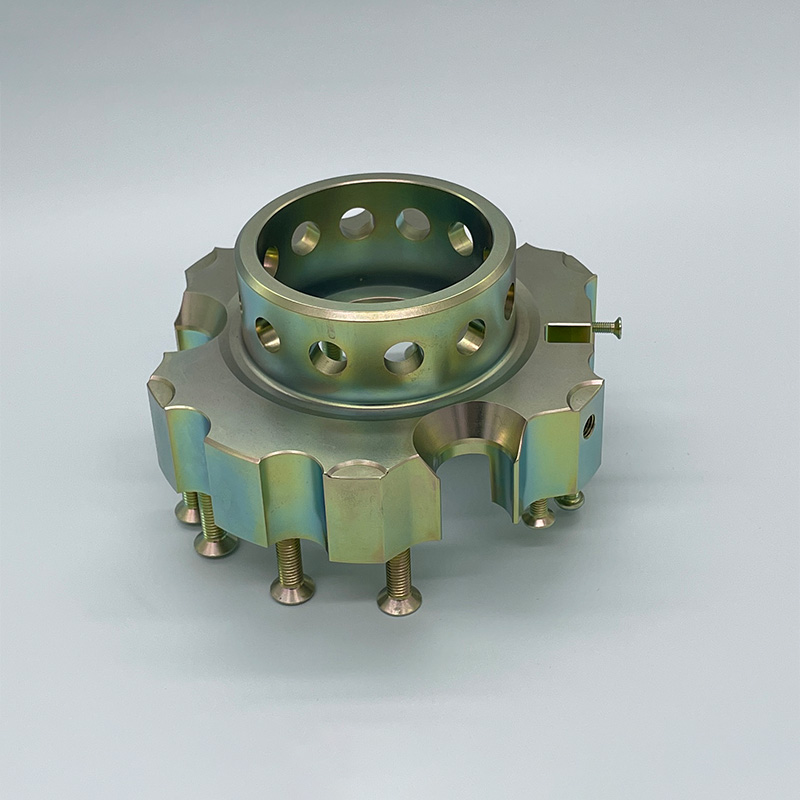
In the ever-evolving landscape of manufacturing, CNC machining stands at the forefront of precision engineering, enabling industries to meet the increasing demand for high-quality, complex metal parts. Among the wide range of materials utilized, brass has gained significant prominence due to its excellent machinability, corrosion resistance, and aesthetic appeal. The latest developments in CNC machining of brass components highlight the synthesis of advanced technology, skilled craftsmanship, and efficient production processes.
### The Rising Demand for CNC Machined Brass Parts
Brass, an alloy primarily composed of copper and zinc, is favored across various sectors such as electronics, automotive, plumbing, and decorative hardware. Its unique properties, including thermal conductivity, low friction, and durability, make it an ideal candidate for precision parts. The demand for high-quality CNC machined brass components is growing as manufacturers strive for superior product performance and reduced material waste.
CNC machining offers unparalleled precision and repeatability, essential for producing complex brass parts with tight tolerances. Technological advancements in CNC equipment, including multi-axis machining centers, have enhanced the ability to craft intricate geometries that traditional machining methods struggle to achieve.
### Technological Capabilities Driving Brass CNC Machining
Modern CNC machining centers are equipped to perform intricate operations involving cutting, drilling, milling, and turning. The incorporation of 3 to 5-axis CNC machines and five-axis linkage processing has revolutionized the machining process by allowing the tool to approach the workpiece from virtually any direction. This capability significantly decreases setup times and increases machining accuracy.
Additionally, the use of Swiss-made precision machinery ensures high-speed, high-accuracy production, particularly for small and complex parts. These advancements reduce lead times while maintaining strict quality standards, which is critical for industries where brass parts must integrate seamlessly with other components.
### Company Expertise in CNC Precision Machining
Since its inception in 2005, one leading company has exemplified excellence in CNC precision machining, especially in the manufacturing of brass parts. With over two decades of industry experience, the company's foundation lies in its deep technical knowledge and dedication to quality.
The company boasts an extensive array of more than 80 advanced CNC machining centers, including three-axis to five-axis machines, five-axis milling lathes, and Swiss precision equipment. Such a diversified machinery portfolio enables it to undertake complex machining projects with high precision and efficiency.
Beyond hardware, the company emphasizes a comprehensive approach, integrating manufacturing, assembly, sales, and import-export services of high-precision and complex parts. This holistic model not only streamlines production but also ensures product consistency and customer satisfaction across global markets.
### Quality Assurance and Precision Control
Quality control is paramount in CNC machining of brass components. Advanced metrology tools and inspection procedures are integrated throughout the manufacturing process to guarantee that finished parts meet rigorous specifications.
The company employs in-process inspection techniques, minimizing errors and ensuring components conform to design tolerance. By combining automated systems with experienced personnel, the company maintains a competitive edge in the precision machining industry.
### Application Scope and Industry Impact
CNC machined brass parts find applications in numerous fields. In the electronics industry, brass components serve as connectors, terminals, and electromagnetic shielding due to their electrical conductivity. In automotive manufacturing, brass parts contribute to fuel system components and fittings because of their corrosion resistance and mechanical properties.
Moreover, brass is widely used in decorative applications, where aesthetics combined with durability are crucial. From architectural hardware to musical instruments, CNC machining allows for customization and intricate detailing, enhancing product value.
The company's ability to produce complex, high-precision brass parts caters to these diverse requirements. Through continuous innovation and adherence to stringent standards, it supports clients in achieving optimal product performance and operational efficiency.
### Commitment to Innovation and Customer Service
In a competitive manufacturing sector, staying ahead requires constant innovation and responsiveness to market needs. The company’s investment in advanced machinery and skilled workforce reflects its commitment to technological progress.
Additionally, its comprehensive service model covers every stage from design assistance to final assembly and logistics. This end-to-end capability ensures that clients encounter minimal delays and receive custom solutions tailored to their specific project demands.
### Conclusion
The advancements in CNC machining technologies have dramatically transformed the production of brass components, enabling greater precision, efficiency, and design complexity. With the combination of state-of-the-art equipment and extensive industry expertise, companies specializing in CNC machining are well-positioned to meet the evolving needs of global markets.
Since 2005, the highlighted company’s dedication to high-precision and complex parts manufacturing, supported by a robust infrastructure of CNC machinery and a comprehensive service approach, underscores its leadership in the field. As demand for quality brass parts continues to grow, such companies will remain integral to driving innovation and excellence in precision engineering.